

Poron vs Rubber Base Mousepads: Is the Premium Base Worth the Upgrade?
Quick Answer
Poron foam bases are worth the upgrade over standard rubber. Poron provides 40% better energy return, doesn't compress permanently over time, grips desks more consistently, and adds premium cushioning that reduces wrist fatigue. All Odin Gaming mousepads use Poron bases — the same material used in aerospace applications.
Shop: Andromeda Pro XL
When most gamers evaluate a mousepad, they focus almost entirely on the surface — speed, control, or hybrid. But the base material is equally important to the overall feel and performance of the pad. In recent years, Poron foam has emerged as the premium alternative to the standard rubber base found on most gaming mousepads. This guide explains what Poron is, how it differs from rubber, and whether the upgrade is worth it for your setup.
What is Poron Foam?
Poron is a brand name for a family of microcellular urethane foam products manufactured by Rogers Corporation. Originally developed for industrial applications — gaskets, seals, cushioning in medical devices — Poron has found its way into premium consumer products due to its exceptional combination of properties: high density, high resilience, excellent compression set resistance, and outstanding grip characteristics.
In the context of a mousepad base, these properties translate to a pad that grips your desk with extraordinary force, maintains its shape and thickness over years of use, and provides a slightly cushioned feel that reduces wrist fatigue during long sessions.
Standard Rubber Base: The Baseline
The vast majority of gaming mousepads use a standard natural rubber base. Rubber is cost-effective, provides reasonable grip on most desk surfaces, and is easy to manufacture consistently. For most gamers, a rubber base performs perfectly well. It grips the desk adequately during normal gameplay, and the slight flexibility of rubber absorbs minor vibrations.
The limitations of rubber become apparent over time. Rubber bases can develop a slight lift at the corners after extended use, particularly in humid environments. They can also leave residue on some desk surfaces. And while rubber provides good grip on most surfaces, it can slip on glass or very smooth desk surfaces.
Poron Base: The Premium Alternative

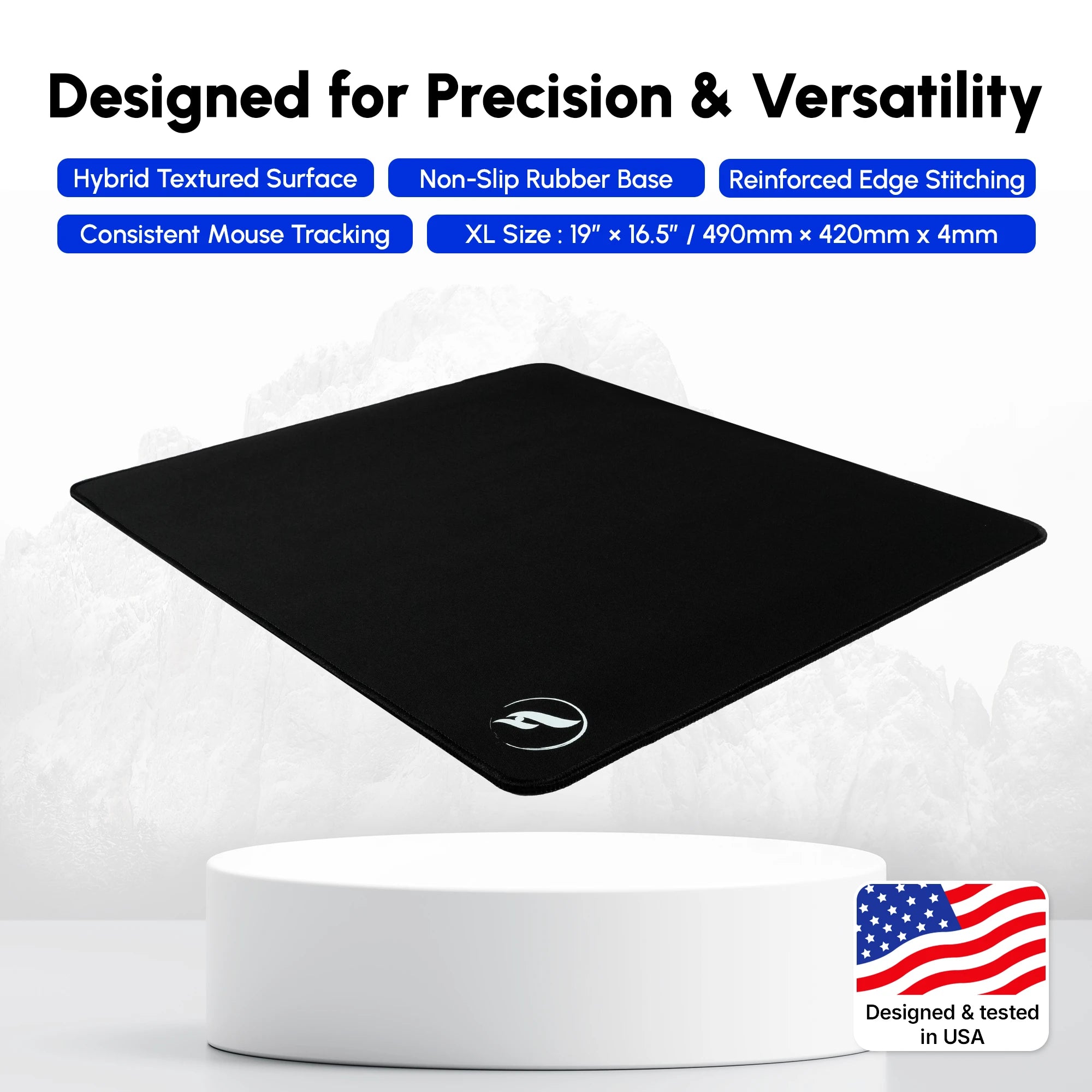
The Odin Gaming Andromeda Pro XL uses a Poron foam base, and the difference is immediately noticeable. The pad locks to the desk surface with a grip that feels almost magnetic — even aggressive, sweeping mouse movements do not cause the pad to shift. This stability is not just a comfort feature; it has a direct impact on aim consistency. If your pad moves even slightly during a critical moment, your muscle memory is thrown off.
Poron's high resilience also means the base maintains its exact thickness and shape over years of use. Standard rubber bases can compress and thin out over time, subtly changing the feel of the pad. Poron resists this compression, ensuring the pad feels the same on day one as it does after two years of daily use.
The Cushioning Effect
One of the most appreciated properties of a Poron base is the subtle cushioning it provides. The microcellular structure of Poron absorbs the impact of mouse movements and returns energy efficiently, creating a feel that is slightly softer and more forgiving than a rigid rubber base. During long gaming sessions, this cushioning reduces the fatigue transmitted through the wrist and forearm — a meaningful ergonomic benefit for players who game for hours at a time.
Side-by-Side Comparison
| Property | Standard Rubber | Poron Foam |
|---|---|---|
| Desk Grip | Good | Exceptional |
| Durability | Moderate (corners may lift) | Excellent (maintains shape) |
| Cushioning | Minimal | Noticeable |
| Wrist Fatigue | Standard | Reduced |
| Compression Resistance | Moderate | Excellent |
Is the Upgrade Worth It?
For casual gamers who play a few hours a week, the difference between a rubber and Poron base may not be worth the price premium. For serious gamers who play daily for multiple hours, the Poron base is a meaningful upgrade that pays dividends in stability, durability, and ergonomic comfort. If you are investing in a premium surface like the Andromeda Pro, the Poron base is an integral part of the package — not an optional extra.